Friday, August 27, 2010

Types of Microorganisms

There are five types of micro-organisms: bacteria, viruses, protozoa, fungi and worms (worms).

Bacteria
The most common organisms on Earth, bacteria live almost everywhere in soil and water, plants and animals. Is this the shape of balls, rods or spirals, bacteria consists of a single cell. Unlike animal and plant cells, bacterial cells lack nuclei, but can perform all functions necessary for life. Most bacteria are parasites, but a few manufacturing their own food. Some of these parasites are very useful - they contribute to many bodily functions including digestion and aid in other processes such as soil degradation and changes in milk for cheese. The results of the disease, however, when bacteria multiply rapidly (each cell simply divides into two identical cells) and damage or kill human tissue, such as pneumonia and tuberculosis. Diseases can also produce toxins that kill or damage the tissues of humans, as in food poisoning or cholera. Sometimes, the bacteria in the body, help for a while, and then something in the body or the bacteria changes, causing destruction of the host.

Bacteria present in the image from top right: E. coli 0157: H7 (food poisoning cases), pyrogenes Strepococcus (causes strep throat), Mycobacterium tuberculosis (TB cases)


Virus
Certainly the smallest bacteria, viruses can occur in spirals, figure 20 or face a form more complicated. They consist mainly of genetic material - DNA or RNA. Cells, but they are not and can not exercise the functions of life by their own means. Living inside the cells of other species, viruses use host cell growth and the creation of new viral particles. How did they acquire genetic material for breeding, often the death of host cells. Find all groups of living things, bacteria and fungi to plants and animals, hundreds of known viruses can cause various infections, chickenpox, measles, influenza, colds, polio and AIDS. Viruses can not move by itself and must be done to cells by air currents and then by body fluids in the cells. Some viruses may lay dormant for years and starts, as in the case of AIDS. Most diseases from other species, for example: smallpox dogs or cattle, hemorrhagic fever in rodents and monkeys, tuberculosis from cattle and birds, horses with colds and AIDS African monkeys.

Viruses in the right image above: Adenovirus causes colds (), influenza causes (flu), and Hepadnavirus (causes hepatitis B)


Protozoa
Protozoa consist of a single cell that contains the nucleus. Cell also contains structures that carry out specific processes needed for life functions. complex and diverse group, the scope of protozoa in many shapes and sizes. They are parasites that must live in different organisms, or living freely in moist habitats. The similarity of the internal structure of protozoa and human cells, it is difficult to treat infections caused by protozoa. Drugs that may destroy the protozoan may destroy human cells. protozoal infections are amoebic dysentery, malaria and African sleeping sickness.

Protozoa photo clockwise from top: Giardia intestinalis (causes diarrhea), Trypanosoma brucei (causes sleeping sickness), Plasmodium gametocyte (causes malaria)


Parasite
other micro-organisms break down body tissues or absorb digested food. They can cause infections of internal disorders of the skin which can cause death. Includes a group called parasitic flukes, roundworms and tapeworms, many-celled animals with developed organs. Among the many types, some are parasites - organisms that live in or on another species, usually the damage in the process of host species. Because of their size, parasitic worms grow outside of cells and can reach astronomical size of 30 feet long.

Bugs in the photo, from left to right: Ascaris lumbricoides (intestinal roundworm), Schistosoma mansoni (parasitic worm that lives in contaminated water and causes schistosomiasis or bilharzia)


Fungi
Fungi include yeasts (unicellular), and fungi and molds (multicellular). Unlike plants, fungi do not make their own food. Some species of fungi for their food by breaking down the remains of dead plants and animals. Others are parasites. Examples include fungal infections, fungal infections and athlete's foot.

Mushrooms in the photo, from left to right: Histoplasma capsulatum (histoplasmosis causes lung infection), Penicillium notatum (produces the drug penicillin)

via sdnhm

Thursday, August 26, 2010

How it Works Ultrasound

Ultrasound, also called sonography or ultrasonography, it requires disclosure of certain body parts to high-frequency sound waves to produce images from inside the body. Ultrasound does not use ionizing radiation (used in X-rays). Because ultrasound images are captured in real time, can show the structure and movement of internal organs, and blood flowing through blood vessels.
Ultrasound is a noninvasive test that helps physicians diagnose medical conditions and treatment. Pelvic ultrasound provides images of structures and organs of the abdomen or pelvis.
There are three types of pelvic ultrasound:
  • Abdominal (transabdominal)
  • Vagina (transvaginal, endovaginal) in women
  • Rectal (transrectal) in men

 
Doppler ultrasound may be part of a gynecological ultrasound. Doppler is a special ultrasound technique to assess blood flow through a blood vessel in the agency's main arteries and veins of the abdomen, arms, legs and neck.
What are the most common applications of the procedure?
In women, abdominal or pelvic ultrasound usually performed to assess:
  • Bladder.
  • Ovaries.
  • Uterus.
  • Cervix.
  • Fallopian tubes.

 
Pelvic ultrasound examinations are also used to monitor the health and development of the embryo and fetus during pregnancy.
 
Ultrasound can help diagnose the symptoms experienced by women, such as:
  • pelvic pain
  • abnormal bleeding
  • other menstrual problems

 
and help to identify:
  • palpable mass, such as ovarian cyst and uterine
  • uterine cancer or ovarian

 
Transvaginal ultrasound is usually performed to visualize the endometrium or lining of the uterus, including its thickness, and ovaries. transvaginal ultrasound also provides a good measure of the muscular wall of the uterus, called the myometrium. Sonohysterography allows more detailed studies of cancer of the mouth. These are usually done to detect:
  • Uterine anomalies
  • Uterine scar
  • Endometrial polyps
  • Uterine fibroids
  • Cancer, particularly among patients with impaired uterine bleeding

 
Some doctors also use Sonohysterography in patients with infertility.
In men, abdominal or pelvic ultrasound used to assess:
  • Bladder
  • Vesicles
  • Prostate
Among men and women, pelvic ultrasound can help identify:
  • kidney stones.
  • bladder tumors.
  • other diseases of the bladder.
In children, abdominal ultrasound, or pelvic floor can help assess:
  • Early or delayed puberty in girls.
  • With pelvic pain
  • appendicitis.
  • abnormalities of ambiguous genitalia and pelvis.
  • pelvic masses in children.


Pelvic ultrasound is also useful in procedures such as needle biopsy, in which needles are used for cell bodies of the sample testing laboratory.

 
Doppler ultrasound images can help the doctor to see and evaluate:
  • barriers to the flow of blood (such as blood clots).
  • vasoconstriction (which may be caused by plaques).
  • cancer and birth defects.

via radiologyinfo

What Causes Ovarian Cysts Occurrence

Ovarian cysts are usually three (3) provides:
  • Follicles or functional ovarian cysts
  • Corpus luteal ovarian cysts
  • Endometriomas or chocolate cysts


What are the follicular cysts?
They are usually benign cysts on the operational (or functional response to a normal menstrual cycle). Every time the egg is produced by the ovaries small cyst forms. Cyst is usually very small and the cracks after the release of eggs during ovulation. If the cyst rupture can not continue to grow, but how rarely grow by 8 cm and Shrink usually after ovulation, surgery is usually not necessary. If rupture occurs, pelvic pain and may result in the last 24-48 hours. Pain because of the small amount of bleeding, which irritates the abdominal cavity. The operation may be indicated if bleeding persists or becomes too high.
 
Diagnosis
Ultrasound is the primary tool used to document the follicular cyst. Pelvic exam will also aid in the diagnosis of cysts, if large enough to see them.
 
Treatment
Follicular cysts usually disappear on their own in 3-6 weeks.
 
What is a corpus luteum cyst?
These are much less common than follicular cysts. ovarian corpus luteum cysts develop versions of the eggs developed follicular cysts and small changes in hormone production of the "yellow body", also known as the corpus luteum. If the corpus luteum reaches a size greater than 3 cm, it is referred to as cysts. Rupture of ovarian cysts occur more frequently on the right side during intercourse and during the days following the menstrual cycle when the cysts are at their greatest. If you grow too large, you may need to be removed surgically.
 
Smokers have twice the risk of functional ovarian cysts.
 
Therapy, oral contraception is well known that significantly reduce the risk of functional ovarian cysts.
 
What is endometriosis / chocolate cysts?
The disease is also known as ovarian endometriosis. line tiny implants of endometrial cells and moved into small cysts on the outside of the ovary. These cysts and the increased production of ovarian endometriosis. Response to hormonal stimulation during the menstrual cycle and the production of many small cysts, which can be treated, and even replace the normal ovarian tissue.
 
They are filled with endometriosis materials thick chocolate, which explains why they are known as chocolate cysts. When this type of ovarian cyst rupture, the material coming into force and the pool at the surface of the uterus, bladder and intestines, and the proper spacing. Adhesions can cause cracks in the ground and can cause pelvic pain.
 
 
What are the symptoms of ovarian cysts?
If these cysts are small (less than 3 cm) did not cause symptoms. Cysts more than 10 cm from the most common cause of symptoms such as pelvic pain, which may be unilateral or bilateral.
 
As in the case of endometriosis, the pain may be worse at different points throughout the menstrual cycle. If these cysts rupture and peritoneal implants are present, the same type of debilitating pelvic pain may occur (see the article on endometriosis).
 
May cause ovarian cysts infertility?
Endometriosis does not seem to affect egg quality, but may interfere with follicular development and ovulation. This situation occurs when the endometriosis adjacent to the pelvic sidewall interference with the ovulatory mechanism, leading to the ovum (egg) collection.
 
How are ovarian cysts diagnosed?
As with any disease, known history of the disease is very important. If a patient with a known history of endometriosis is pelvic ultrasound with a large ovarian cyst, it is likely to be endometriomas.
 
Medical examination
Pelvic examination may not show the normal weight or weight of the ovaries results can be felt. Detection depends on the mass.
 
Blood Test
As in the case of endometriosis, as described above in the CA 125 blood test is used in the diagnosis of endometriosis. Since the blood test is also used in the diagnosis of ovarian cancer, be careful in how research is interpreted. Often, traditional gynecologists recommend removal of the uterus and ovaries (removal of both ovaries) in women aged over 40 years of the mass of ovaries on ultrasound and elevated CA 125
 
At the Institute, we have treated many women who have had the same findings and endometrioma, but did not show ovarian cancer. It is noteworthy that cancer can be excluded by biopsy and tissue examination.
 
X-ray studies
Transvaginal ultrasound Abdominal most commonly used diagnostic test for endometriosis. Transvaginal scanning has the advantage of providing more information about the internal composition of the mass of the ovary. Accuracy in the diagnosis of endometriosis depends on the experience of the radiologist.
 
These ovarian cysts vary in appearance with only the cyst walls, debris, and even solid. This is mainly due to the thick "chocolate" material. CT and MRI are rarely indicated as the main diagnostic procedures, even if the cancer is a major driving force for one of them could be useful.
 
How are ovarian cysts treated?
Unlike endometriosis, it is especially the process of ovarian cysts. Traditional face gynecologists ovarian cysts in the ovaries (ovaries removed) or a radical approach to the uterus.
 
Female Alternative Surgery
First, we confirm the diagnosis of endometriosis, and ovarian cancer excluded. We believe that women who have ovarian cysts on ultrasound and CA 125 levels should be informed that they may be secondary to the endometrioma and does not necessarily mean cancer.
 
In surgery, we remove all the "material of chocolate, with great care not to spill the entire contents of the abdomen. Then remove the inner lining of the cyst cavity, the surface treatment of the argon laser, and finally to reconstruct the ovary. In the Institute, organ protection is our priority.

 
via alternativesurgery

Various Kinds of Cancer in Women

Adnexal masses may occur during a routine examination of asymptomatic patients. They can be found in the assessment of a patient with pain, bleeding or other disabling symptoms. Most of these masses are benign and largely self-Solve, and some of them be dangerous, even fatal. The challenge, of course, is to determine who is who.

Simple Ovarian Cyst
Ovarian cysts are fluid-filled sac from the ovary.

Ovarian cysts can be classified into two types: physiological cysts following ovulation (or atttempted ovulation) and neoplastic cysts. Of the two, related to ovulation cysts are much more frequent.

Functional cysts are common and usually cause no problems. Each time a woman ovulates, she forms a small ovarian cyst (3.0 cm or less). Depending on where her menstrual cycle, you can find these small follicular cysts. Large cysts (> 7.0 cm) are rare and should be used clinically or by ultrasound.

Occasionally, simple ovarian cysts can cause a problem:
  • Delaying menstruation
  • Cracks
  • Torsion
  • Causing pain

95% of ovarian cysts disappear spontaneously, usually after the next menstrual flow. And those who are behind these problems are often removed surgically.


Here are some pictures that can explain the kinds of cancers in women

Figure mucinous cystadenoma (benign)

                                                        Figure Torsioned Ovarian Cyst

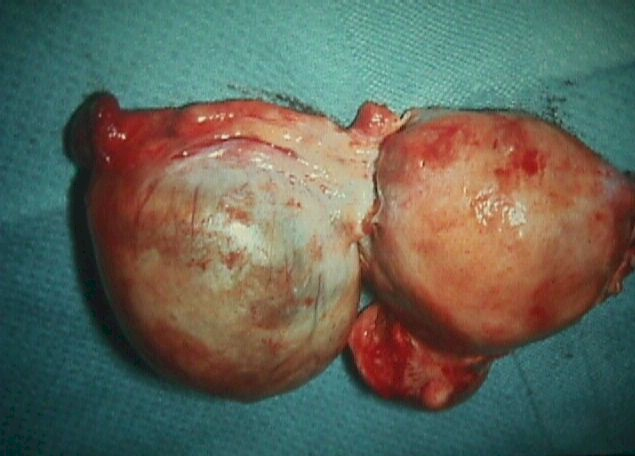
                                                    Figure Endometrioma of Right Ovary

Figure Dermoid cyst with torsion and infarction

                                             Figure Uterine Fibroid Tumors (Leiomyomas)

                                                           Figure Hydrosalpinx from PID


What Causes Depression Occurrence

Depression is a common cold of mental disorders - most people will be affected by depression in life, directly or indirectly, by a friend or family member. The confusion is widespread about depression, as depression, which is exactly and what makes it different just feeling down. There are also many types of depressive disorders (eg unipolar depression, biological depression, manic depression, seasonal affective disorder, dysthymia, etc.) that you can experiment. There were so many terms used to describe this set of emotions we all felt at one time or another in our lives to a greater or lesser degree it is time to clarify the issue.
                                                                 figure via topnews

Depression is characterized by several common symptoms. These include persistent sadness and anxiety, or "empty" and feelings of hopelessness and pessimism. A depressed person often have a sense of guilt, worthlessness and helplessness. I no longer take interest or pleasure in hobbies and activities that were once enjoyed, which can include things such as going out with friends, and even sex. Insomnia, early morning awakening and hypersomnia are common.

Appetite and / or loss of weight or overeating and weight gain may be symptoms of depression in some people. Many others experience decreased energy, fatigue and a constant feeling of "slow". Thoughts of death or suicide does not occur in those who suffer from severe depression. Irritability and anxiety in people who suffer from depression are widespread. A person also has depression, concentration problems, memory problems and make a decision. And sometimes, persistent physical symptoms that do not respond to traditional treatments - such as headaches, digestive disorders, and chronic pain - may be signs of depressive illness.
Depressive disorders come in many different types, but each type has its own unique symptoms and treatments.

Major depression, the most common type of depression, characterized by a combination of symptoms (see symptom list) that interfere with the ability to work, study, sleep, eat and enjoy once pleasurable activities. This episode exclusion of depression may occur only once, but often occurs several times in my life. of mental health professionals to use this list of specific symptoms of depression, is it or not. Depression is also assessed by a medical diagnosis or mental health in terms of validity - mild, moderate or severe. Severe depression is the most serious.

Less severe type of depression, dysthymia, involves long-term, chronic symptoms that does not, but it leads to work well or feel well. Many people with dysthymia also have major depressive episodes at some point in their lives.

Another type of depressive disorder is bipolar disorder, also known as manic-depressive. Not as common as other forms of depressive disorders, bipolar disorder is characterized by cycling mood changes: severe highs (mania) and lows (depression). Sometimes the mood switches are dramatic and rapid, but they are generally progressive. When the cycle of depression, you can have all or part of the symptoms of depression. When in the manic cycle the person may be overactive overtalkative, and lots of energy. Mania often affects thinking, court and social behavior so as to cause serious problems and embarrassment. For example, a person in a manic phase may feel proud, full of great programs that can understand business decisions unwise to romantic sprees. Mania, left untreated, may worsen psychosis.

Symptoms of Depression

Not everyone who is depressed or manic experiences every symptom. Some people have symptoms, some many. The severity of symptoms varies with individuals and also varies over time.

DEPRESSION
  • Persistent sad, anxious, or "empty" mood
  • Feelings of hopelessness, pessimism
  • Feelings of guilt, worthlessness, helplessness
  • Loss of interest or pleasure in hobbies and activities that were previously known, including sex
  • Decreased energy, fatigue, is "derived"
  • Difficulty concentrating, remembering or making decisions
  • Insomnia, early morning awakening or hypersomnia
  • Appetite and / or weight loss or overeating and weight gain
  • Thoughts of death or suicide, attempted suicide
  • Anxiety, irritability
  • Persistent physical signs that do not respond to treatment, such as headaches, digestive disorders, and chronic pain

Symptoms of mania (for bipolar disorder)
MANIA
  • Improper or excessive excitation
  • Unusual irritability
  • Increased need for sleep
  • The concept of high
  • Increased said
  • Racing thoughts
  • Increase Libido
  • Significantly increased energy
  • Lack of Judgement
  • Inappropriate social behavior

Factors Causing Depression
basic understanding of the causes of depression - and, indeed, cause mental disorders - is that still do not know what causes these disorders. It is widely accepted that all mental disorders are caused by complex interactions and combinations of biological, psychological and social. This theory is called bio-psycho-social causation and the most widely accepted theory of the origin of disorders such as depression by professionals.

Some types of depression in families, suggesting that the biological vulnerability can be inherited. This seems to be the case with bipolar disorder. Studies of families with members of each generation develop bipolar disorder found that Alzheimer's disease have a gene different from those who do not get sick. However, the converse is not true: Not everyone with the gene that causes vulnerability to bipolar disorder is the disease. Apparently, other factors, stresses may be in the home, at work or school, participate in his event.

In some families, depression also seems to occur generation after generation. However, it may also occur in people who have no family history of depression. Are inherited or not, depression is often associated with changes in brain structure or brain function.

People who have low self-esteem, which is still considered the world with pessimism or who are readily overwhelmed by stress, are prone to depression. Does this mean that the psychological predisposition or an early form of the disease is not clear.

In recent years, researchers have shown that physical changes in the body can be accompanied by mental changes. medical illnesses such as stroke, heart attack, cancer, Parkinson's disease and hormonal disorders can cause depression, apathy and a patient does not want to take care of your physical needs, thus prolonging the recovery. In addition, a serious loss, difficult relationship, financial problem or stress (reception, and even desired) change in the pattern of life may lead to an episode of depression. Very often, a combination of genetic, psychological and environmental factors involved in the development of depressive disorders.

via psychcentral

Ways of Lowering Bad Cholesterol

Cholesterol Truth - good and bad
There are really two types of cholesterol, which are not well known, for people who misinterpret something bad. HDL cholesterol is the name of good and evil is called LDL. The blood of too much LDL causes atherosclerosis in the arteries. At the time, blood has a difficult time traveling arteries, because it becomes a narrow opening, the amount of bad cholesterol in it. Dietary cholesterol is not offender as having high cholesterol in the blood. This is a fairly large amount of saturated fat Tran, who is to blame for the widening of the arteries. To keep the cholesterol down, eat lots of food unsaturated fat and fibrous, and exercise often.


Cholesterol and Their Significance
Every adult should have their cholesterol checked at least once every five years. When a cholesterol test, you can usually get four different results. Here are 4 categories and you want a healthy range to be in.
  • Total cholesterol - less than 200 mg / dL (5.2 mmol / L)
  • LDL cholesterol - less than 100 mg / dL (2.6 mmol / L)
  • HDL cholesterol - greater than 40 mg / dL (1.0 mmol / L)
  • Triglycerides - less than 150 mg / dL (1.7 mmol / L)
Are you above or below the level required in each category, there is generally shown a change in diet or exercise is required.
 
Protect your heart with vitamin E
Vitamin E is an important vitamin in leafy vegetables, nuts and vegetable oils. It was previously believed that the addition of vitamin E may reduce the risk of heart disease, but numerous studies in recent years have shown that the additive does not prevent heart attacks or strokes.
 
The lowering of cholesterol with these five foods
  1. Oats and oat bran: they contain a large amount of soluble fiber, which can lower LDL.
  2. Fish: Fish are a great source of omega-3 fatty acids which reduce LDL and HDL raises.
  3. Nuts : Nuts are not only rich in fiber but contain healthy fats, which should be of LDL in check.
  4. Phytosterols : This is in foods such as margarine, salad dressing, orange juice, biscuits and functional. 2 grams a day lowers LDL by 10-15%.
  5. Self: This popular replacement for meat can lower LDL by up to 3%.
 
Ford benefits of plant sterols
Granola bars, distributed Benecol, milkfat Vitatop free and muffin tops are excellent sources of food, which also have large amounts of plant sterols in them. If you want to help your heart, it can be done by eating foods rich in plant sterols, and stay away from saturated fat-rich foods. But we can not abandon the regime responsible for saturated fat. To keep cholesterol in check to ensure they stay mad at the bottom, you need to do often and eat healthy.

Wednesday, August 25, 2010

Parts and Functions of Our Brains

Bark (Brain)
Cortex, or brain, consists of two hemispheres (or wall) connected to the band of tissue called the corpus callosum. These hemispheres control speech, intelligence and memory. There are special centers for specific functions such as call center governs the ability to create sounds in words meaning, expressions, etc.


Left Hemisphere
The left hemisphere "on the right side of the body. It controls speech, comprehension, arithmetic, and writing.

Right Hemisphere
The right hemisphere controls the left side of the body. He is responsible for more abstract skills such as creativity, spatial ability and artistic and musical skills.

Each hemisphere is divided into lobes. (In this example, the frontal lobe, temporal lobe, parietal lobe, occipital lobe, sensory motor and the Gaza Strip are the parts that make up the cortex).

Frontal Lobe
Frontal lobe is in front of the brain behind the forehead. It is the center of the sentence, reasoning, personality, motivation and inhibition of impulses. It also plays a role in controlling emotions, social skills and expressive language.

Parietal Lobe
Parietal lobe is located just behind the frontal lobe. He is responsible for receiving and processing of sensations of touch (eg, pain, heat, cold, pressure, size, shape and texture). Analyze information in conjunction with the five senses. It is also closely associated with the writing and the mastery of speech.

Temporal Lobe
Temporal lobe is located next to the frontal and parietal lobes, just above the ear. It is the center of hearing, taste and smell. He is also involved in obtaining information and auditory memory.

Occipital Lobe
Occipital lobe is located behind the parietal and temporal cortex. Damage in this area can affect vision, such as perception and understanding of visual information.

Cerebellum
Cerebellum is located below the cerebral cortex at the back of the skull. Is smaller than the bark. Its task is to communicate and coordinate the signals from the cortex. also controls voluntary muscle movement, balance, posture and movement coordination.

Brainstem
Brainstem is the cerebellum and cerebral cortex. It connects the spinal cord to the cerebral cortex. Its role is to transmit messages back and forth between different parts of the body and the cerebral cortex.

Brainstem coordinates bodily functions such as breathing, blood pressure and pulse. It also contains the reticular formation, which is responsible for consciousness, drowsiness and attention. Brainstem is 12 cranial nerves.

These nerves control smell, hearing, vision, eye movement, facial sensations, taste and swallowing. Controlling the movements of facial muscles, neck, shoulders, and tongue.

Damage to one of these areas can have an impact on the areas it controls. However, there are no two similar injuries. It is important to note that all sectors will be affected, brain damage can be localized and very specific areas may be limited. Above is only for a brief overview of the different areas of the brain and control. It is impossible to generalize, which relate to the control centers in the survival of brain damage, without a large number of medical observation and long term.